SServices
Engineering
services
Ten areas of work, usually combined. Each description below states what the work involves and what it produces. No prices, service-level promises, or performance guarantees are published on this website.
Index of services
- 01Custom software development
- 02Web application development
- 03Cloud architecture
- 04System integration
- 05Cybersecurity engineering
- 06Data platforms and analytics
- 07DevOps and infrastructure
- 08Technical consulting
- 09Software modernisation
- 10Ongoing technical support
Service 01
Custom software development
Systems designed around a specific process rather than adapted from a generic product.
We start from the work the organisation actually performs: the records it keeps, the decisions it makes, and the rules that govern them. Those rules become an explicit domain model with enforced invariants, so invalid states cannot be stored. Implementation proceeds in deployable increments, each one reviewed against the agreed model.
Typical scope
- Domain modelling
- Service and API design
- Business rule implementation
- Automated test suites
Service 02
Web application development
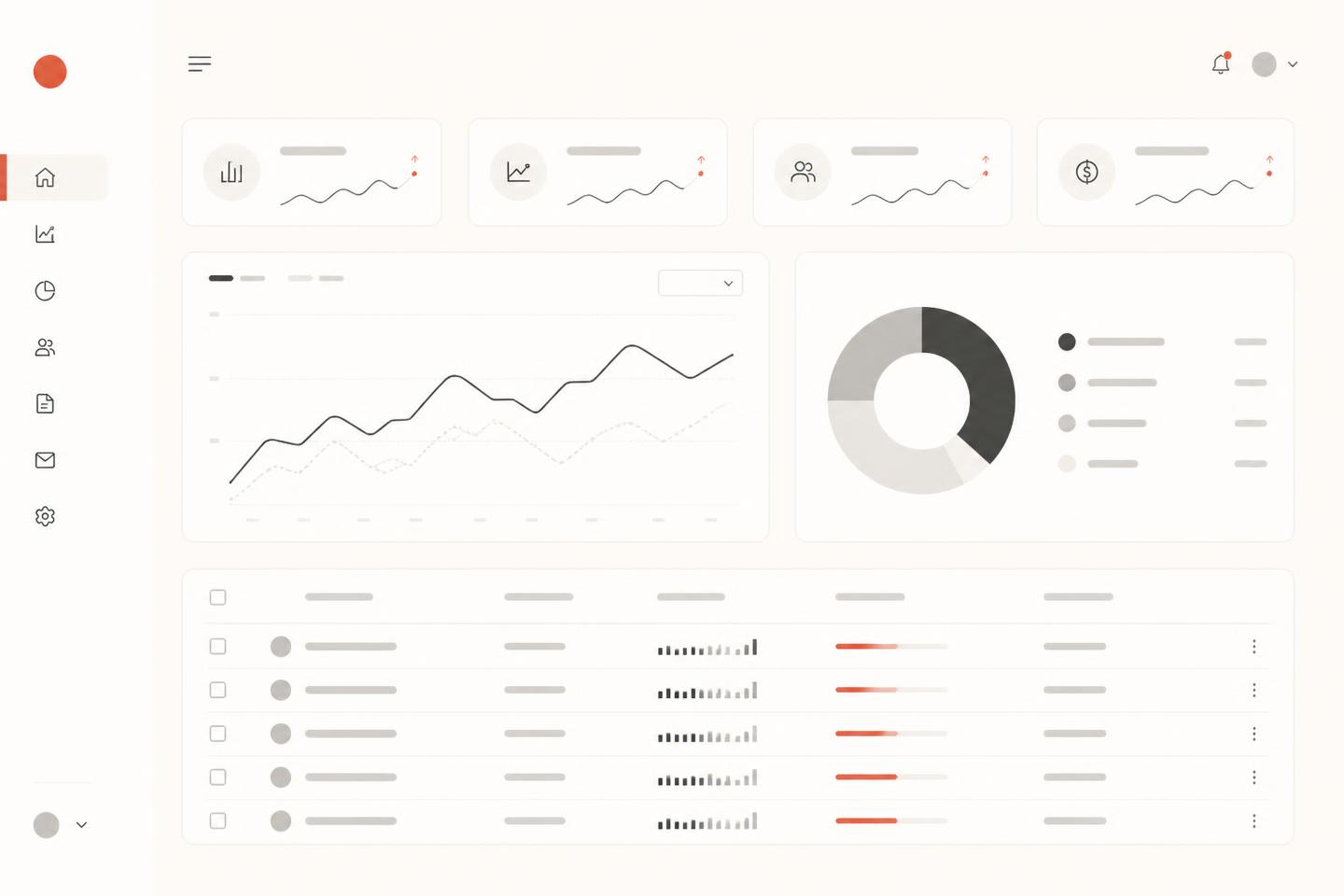
Interfaces that stay fast, accessible, and predictable as functionality accumulates.
Applications are built with server-rendered delivery where first-load speed and indexability matter, and with client-side interaction where the task requires it. Component structure follows a documented design system, and accessibility criteria — semantic structure, keyboard operation, contrast, focus visibility — are treated as functional requirements rather than a later audit.
Typical scope
- Component and design systems
- Server-side rendering
- Accessibility compliance
- Performance budgets
Service 03
Cloud architecture
Environment design that keeps scaling, isolation, and cost under deliberate control.
We define network topology, compute allocation, storage tiering, and identity boundaries as one connected decision. Environments are described in code so they can be recreated, compared, and audited. Cost behaviour is modelled during design, which makes the financial effect of a scaling decision visible before it is deployed.
Typical scope
- Network and identity design
- Compute and storage strategy
- Multi-environment setup
- Cost modelling
Service 04
System integration
Reliable connections between internal systems and third-party services.
Integrations are built contract-first, with schemas validated at the boundary and every exchange logged for reconstruction. Failure handling — retries with backoff, idempotency keys, dead-letter handling, and reconciliation jobs — is specified as part of the design, so partial failures resolve without manual data repair.
Typical scope
- API and event contracts
- Message queues and brokers
- Idempotency and retries
- Reconciliation logic
Service 05
Cybersecurity engineering
Security implemented in the architecture rather than added at the perimeter.
Work begins with a threat model for the specific system: who the actors are, what they can reach, and what damage a compromise causes. From that we implement authentication and authorisation, secrets management with rotation, network segmentation, dependency scanning, and audit logging designed for investigation.
Typical scope
- Threat modelling
- Access control and roles
- Secrets management
- Hardening and audit logging

Service 06
Data platforms and analytics
Pipelines and models where every reported figure can be traced to its source.
Ingestion, transformation, and serving layers are separated, versioned, and tested. Schemas are declared, transformations are deterministic, and data quality checks fail loudly rather than silently degrade a dashboard. Lineage is recorded so that a number in a report can be followed back through each transformation to the originating event.
Typical scope
- Batch and streaming ingestion
- Warehouse modelling
- Data quality checks
- Lineage and documentation

Service 07
DevOps and infrastructure
Reproducible environments and delivery pipelines that make releases routine.
Infrastructure is defined as code, reviewed like application code, and applied through pipelines rather than consoles. Delivery includes automated testing, artefact traceability, staged rollout, and a rehearsed rollback path. Observability — metrics, structured logs, traces, and alerts with agreed thresholds — is part of the same pipeline.
Typical scope
- Infrastructure as code
- CI/CD pipelines
- Container orchestration
- Monitoring and alerting
Service 08
Technical consulting
Independent assessment of architecture, technology choices, and delivery capacity.
We review an existing system and report what we find: structural risks, operational gaps, security exposure, and the cost of each option for addressing them. Deliverables are written documents with concrete recommendations and their trade-offs, usable by both engineering and management readers.
Typical scope
- Architecture review
- Technology assessment
- Risk and gap analysis
- Delivery planning
Service 09
Software modernisation
Incremental replacement of legacy components while the system stays in service.
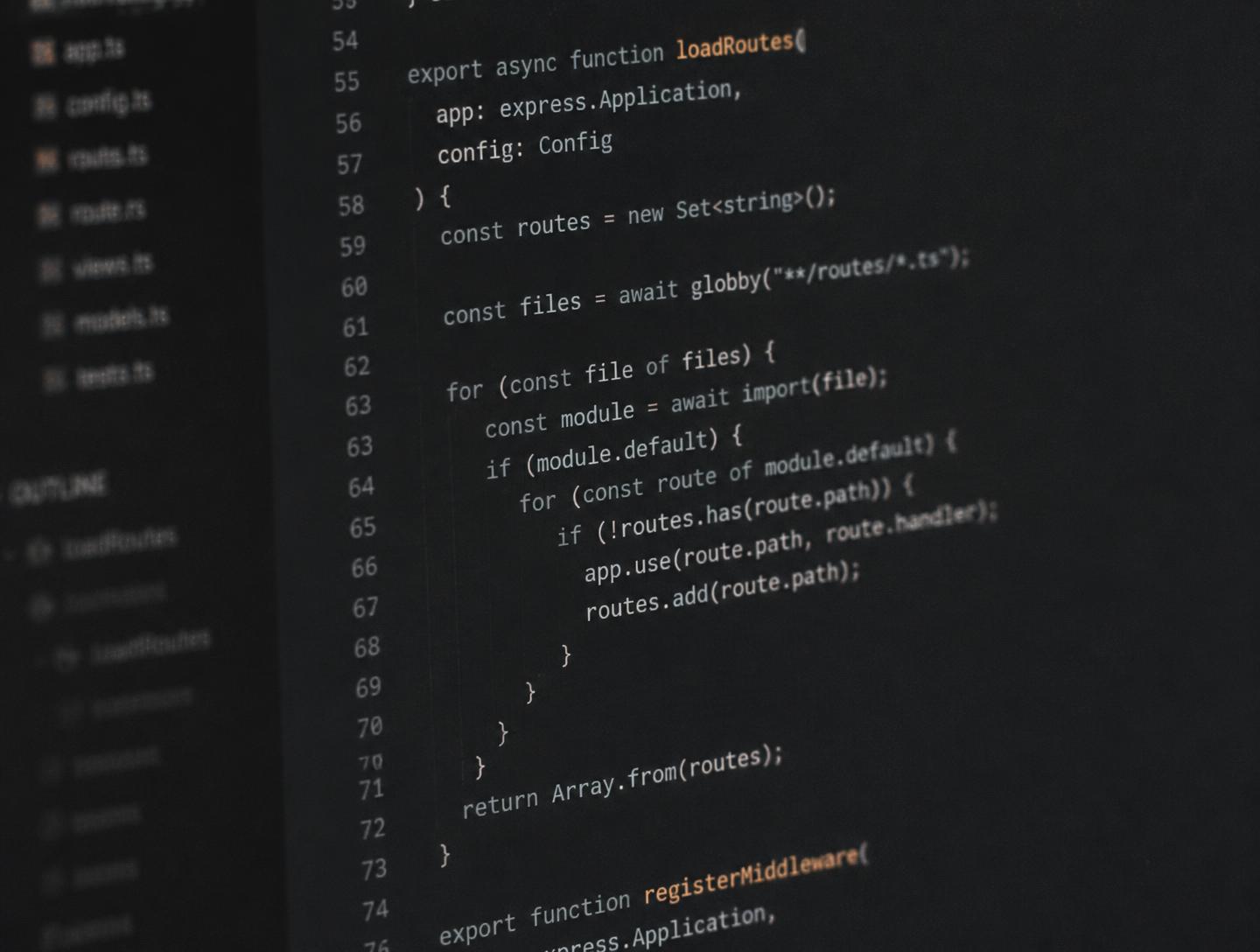
Rewrites that stop the business are avoided. Instead, boundaries are drawn inside the legacy system, traffic is routed through a controlled layer, and components are replaced one at a time with parallel verification. Data migrations are written to be repeatable and reversible wherever the model allows.
Typical scope
- Dependency mapping
- Strangler-pattern migration
- Data migration
- Parallel-run verification
Service 10
Ongoing technical support
Maintenance and controlled evolution after the first release.
Support covers dependency and platform updates, monitoring review, incident response with written follow-up, capacity planning, and a steady stream of small improvements. The objective is that the client's own team can operate the system, with our involvement reducing over time rather than becoming permanent.
Typical scope
- Patching and updates
- Incident response
- Capacity review
- Knowledge transfer
TEngagement conditions
How work is organised
- Scope
- Written before work starts, including exclusions and open questions.
- Access
- Client-owned repositories, cloud accounts, and credentials throughout.
- Reporting
- Progress shown as working software in a real environment.
- Exit
- Documentation and infrastructure definitions sufficient for another team to continue.
UContact information
Details
- Company
- RIVER KG
- [email protected]
- Website
- riverkg.com